

Our News Articles
We keep our finger firmly on the pulse of the industries we specialise in. Discover the latest news and views below.

We keep our finger firmly on the pulse of the industries we specialise in. Discover the latest news and views below.
The UK is making significant progress in its energy transition by enhancing domestic low-carbon energy sources such as wind, solar, nuclear and hydrogen and utilising initiatives such as the Powering Up Britain strategy. Carbon capture technology is also being implemented, offering significant environmental and industrial advantages by trapping up to 90 per cent of emissions from power plants and heavy industry, preventing them from entering the atmosphere.
Additionally, the Humber region, the UK’s largest industrial carbon emitter, is transforming into a leading Net Zero industrial cluster, with the aim of achieving Net Zero by 2040. This strategy is designed to improve energy independence, reduce consumer costs, ensure climate security and create economic opportunities through investments in local industries and technologies. The ultimate goal for the UK is to reach Net Zero by 2050.
Engineering plays a crucial role in supporting regional development, which is why in this month’s blog post, our Managing Director, Dean Murphy, explores how the mechanical and electrical engineering industries are laying the groundwork for renewable energy systems and modernising infrastructure to facilitate progress.
The Humber region aims to achieve Net Zero by 2040, requiring strong collaboration among industry experts, leaders, and the government to deliver essential infrastructure projects. This transition is projected to create over 50,000 jobs, boosting the local economy and enhancing the talent pipeline.
These key initiatives focus on significantly reducing industrial emissions and preventing carbon leakage. Capitalising on its identity as the “Energy Estuary,” the region is developing offshore wind energy and repurposing existing infrastructure for hydrogen storage, fostering a sustainable future for the community.
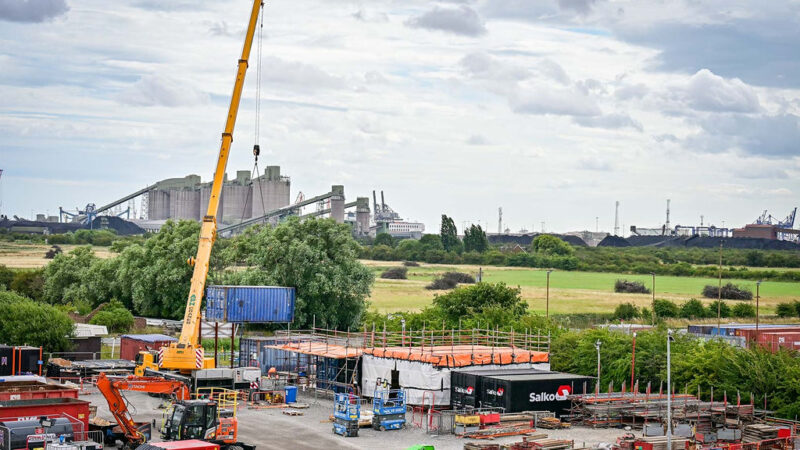
A prime example of innovation in the region is Salko UK’s recent project at Immingham Power Station in North Lincolnshire. Salko has been awarded the complete mechanical scope for the construction of a new Open Cycle Gas Turbine (OCGT).
As part of the Humber Zero project, this development aims to contribute nearly a fifth of the UK Government’s carbon capture targets for 2030. The new OCGT will enhance the UK’s energy resilience and support the transition to Net Zero by promoting grid stability and providing reliable power when needed. The turbine will generate up to 299 megawatts (MW) of electricity, enough to sustainably power 300,000 homes across the UK.
Salko UK is also working on repair works at South Humber Bank scheduled for the coming months.
With more than 25 years supporting major industrial and energy projects, Salko UK sees firsthand how engineering capability underpins regional progress.
By prioritising innovation and equipping engineers with essential tools, the UK can not only meet its Net Zero objectives but also lead in sustainable engineering practices. Empowering engineering professionals fosters progress in efficiency, resilience and innovation across infrastructure and technology, while actively contributing to a greener future.
Utilising low-carbon energy sources and advancing technologies like carbon capture are vital for our region’s economic and environmental transformation. Collaboration among industries, government and engineering professionals is crucial to achieving these goals. As the Humber strives for Net Zero by 2040 and beyond, continuous investment in talent and innovation within the engineering sector is imperative. This approach will facilitate significant emission reductions, empower local communities, and ensure a resilient, sustainable future for generations to come.
To find out more about our work, please visit: https://www.salko.co.uk/case-studies/


For a clear, honest appraisal of your next project. Just give us a call to get started on 01430 431977